8. Textbooks, References and Resources

(from The Learning and Teaching of Slavic Languages.
Edited by Olga Kagan and Benjamin Rifkin. Bloomington, IN: Slavica, 2000, pp. 563--88[!])


Polish Language Textbooks and Readers
Currently Used in the United States*

Leonard A. Polakiewicz

© 2000 by Leonard A. Polakiewicz. All rights reserved.


In a recent article I suggested that the future of Polish language instruction in the United States would depend on our ability to interest students in studying Polish which will involve the development of suitable instructional materials and, therefore, the identification and evaluation of materials currently used, on the one hand, and the development of additional and more suitable materials, on the other hand (Polakiewicz 1996: 142). The present article examines instructors’ assessments of Polish language textbooks and readers currently used in the United States obtained from a survey conducted from October 1996 through March 1997. This survey, the most extensive and comprehensive of its kind to date, followed two research projects - one conducted in 1995 on the teaching of Polish at U.S. institutions of higher education from 1968--1995 (Polakiewicz) the other conducted in 1996 to update the 1995 data for the publication PIASA Directory of U.S. Institutions of Higher Education and Faculty Offering Instruction in Polish Language, Literature, and Culture 1996--97 (Polakiewicz 1997).

Several surveys of textbooks and readers used for Polish language instruction have been conducted over the past 35 years, namely, Zagórska Brooks (1966), Pruska-Munk (1974), Woytak (1979, 1980), and Stansfield and Galloway (1993).

Brooks’ (1966) study[1] was not the product of an actual survey, rather, it was a review article expressing the author’s views regarding the thirteen most commonly used textbooks for the study of Polish, particularly by Russian majors, at the time. The assessments are impressionistic with minimum formal critique. Her main observation was that "the existing materials are few in number and are not always acceptable" (83).

Pruska-Munk’s (1974) study was the product of a formal survey aimed at updating Brooks’ findings. She mailed her survey to 28 colleges and universities and received responses from 21 instructors[2] (i.e., 75%, assuming only one instructor responded from each institution) who taught the Polish language in 1972. The respondents provided data on textbook usage and a critique of the textbook(s) they used and other available textbooks. The survey produced the most comprehensive data to that date.

Woytak reported the results of her survey in two separate publications: 1) "Polish-Language Textbooks for English-Speaking Students" (1979) and 2) "Polish Language Course Offerings and Textbook Usage at Colleges and Universities in the United States" (1980).[3] Both studies were based on her "Polish Survey 1978" which produced responses to a questionnaire mailed to seventy-four colleges and universities identified as presumably offering the Polish language. Of the 52 (70%) institutions that responded, 40 indicated they currently taught Polish while 12 indicated they had discontinued offering the language. The reliability of the number of institutions identified by Woytak as teaching Polish is undermined by the 1977 MLA Survey data which recorded 61 institutions offering credit-bearing courses, and an additional number of institutions which offered non-credit-bearing courses and which were not included in the MLA survey.[4] Woytak’s survey findings echo Brooks’, namely, that there is a paucity of Polish textbooks for English-speaking students and that the majority of institutions use Polish textbooks published in the United States or England.

The results of the next survey entitled A Survey of Materials Development Needs in the Less Commonly Taught Languages: Final Report were published by Stansfield and Galloway (1993). Their survey concerned Polish and twenty-two other less commonly taught languages. The survey participants for Polish included seventeen selected universities, i.e., approximately 30% of all the universities teaching Polish in the U.S. in 1992. Given that eleven of the seventeen invited institutions actually participated in the survey, the percentage was reduced to 20%.[5] Surprisingly, despite the survey staff’s effort to ensure that the survey "demonstrate adequate breadth, depth and style," the University of Illinois at Chicago, the flagship institution in the U.S. in terms of enrollments and the number of faculty teaching Polish, and other strongholds were not consulted. The purpose of the survey was "to provide a resource to be used in determining funding priorities for the development of instructional materials in the less commonly taught languages for the 1990s, and as a guide for the applicant community" (Stansfield and Galloway 1993: 1). The survey employed two types of questionnaires: one to be completed by instructors teaching Polish at the seventeen selected institutions and the other to be completed by program/center directors. Polish constituted one of the languages of "Eastern Europe and the Former Soviet Union World Area." Charles E. Gribble of Ohio State University wrote the overview of priorities for this world area. Eleven (65%) of the seventeen universities selected to participate responded. Eleven instructors (a small sampling considering that more than 100 instructors taught Polish in the U.S. in 1992), returned completed survey questionnaires totaling twenty-three assessments consisting of eleven evaluations related to beginning-level textbooks, seven evaluations related to intermediate-level textbooks, and five evaluations related to advanced-level textbooks. The Stansfield and Galloway survey updated Woyak’s 1979--80 information regarding the identity and frequency of usage of textbooks and related instructional materials such as audiotapes, videotapes and computer software, and provided respondents’ evaluation of them with regard to their adequacy for teaching Polish at various levels. The data reported was of limited value due to the small number of survey participants and the restriction requiring each participant to identify only "the three main textbooks used in the course" accompanied by a rather vague scale to evaluate them.

As a followup to my 1995 study I conducted a survey from October 1996 through March 1997 to identify and solicit evaluations of materials used for teaching Polish in the United States. The survey instrument consisted of a questionnaire including Table 2 (in the appendix) and a list of language textbooks and readers (found in the appendix to this article). Survey participants were asked to evaluate the materials they used and to answer questions about others with which they were familiar. There was a 100% response from 97 instructors of Polish at 88 institutions (see appended list).[6] Forty-five respondents wrote comments. The author is extremely grateful to the survey participants for their cooperation.

The survey list of materials included a total of twenty-one items (see appended list). In addition, the respondents reported using eleven language textbooks and readers which did not appear on the survey list (see appended list).

Ratings of Materials

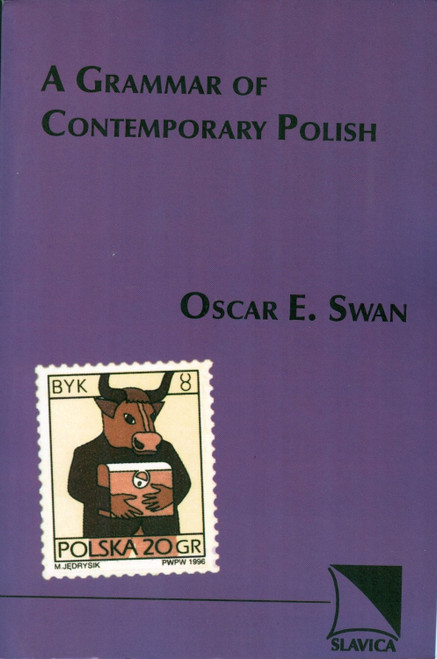
The textbooks are rated according to how frequently they are used compared with other textbooks. Swan’s First Year Polish continues to dominate the field, used by 55% of the respondents in the 1992 Stansfield and Galloway survey and by 34.4% of respondents in the current survey. Fourteen respondents reported using my Supplemental Materials for First Year Polish, a companion piece to Swan’s. Twenty respondents indicated that, for the beginning level, they were using textbooks other than Swan’s, either instead of or in combination with it. Schenker’s Beginning Polish is used by 6.3% of respondents, and Vols. I and II rank sixth and eleventh respectively. If Grala’s and Przywarska’s W Polsce po polsku had been included in the survey list of textbooks, it would rank sixth, i.e., higher than Schenker’s Volume I. Volumes I and II of Rudzka’s and Goczolowa’s Wsród Polaków ranked third and fourth respectively. Table 1 in the appendix indicates how many instructors use each textbook.

Five other beginning-level textbooks appeared since 1979--80 which do not appear on the survey list: Grala and Przywarska, W Polsce po polsku, Krzyzanowski et al., POLISH: Individualized Instruction Series, Ronowicz and Feldstein, Elementary Polish for English-Speaking Students, Kucharczyk, Zaczynam mówic po polsku, and Miodunka, Uczmy sie polskiego: Let’s Learn Polish, which add up to an encouraging total of eleven new textbooks during the past thirteen years. Of these eleven texts, five were published in Poland, three in the U.S., two in England, and one in Australia, representing international interest in Polish. A new reader for beginning Polish, A Graded Reader of Classical Polish Literature by Albert Juszczak, appeared in 1996.

With regard to intermediate-level textbooks, of those indicating they used a textbook listed on the survey, 64% reported using Swan and 36% Grala and Przywarska. In addition, 4 respondents reported using Krzyzanowski et al., POLISH: Individualized Instruction Series, three used Martyniuk’s Mów do mnie jeszcze, three used Miodunka’s Uczmy sie polskiego (textbook-video Part II) and two used Kucharczyk’s Juz mówie po polsku, Part II. The appearance of Miodunka’s video course in 1996 was a major event, perhaps the most important one for the study of Polish in the last decade or so. Schenker’s Fifteen Modern Polish Short Stories is the most widely used reader for its level, used by 13, or 87% of respondents. Five respondents use my Supplemental Materials for Fifteen Modern Polish Short Stories, a companion piece to Schenker’s. Walczynski’s Reading Authentic Polish and Czarnecka’s and Gaszynska’s Polubic Polske (not on the survey list) were each used by one respondent.

There are few textbooks for advanced students, but they are of good quality. The appearance of Oleksy’s and Swan’s W labiryncie in 1993, a video-based Polish language course, was a major contribution to the study of Polish at the advanced level and nine respondents reported using it. In addition, one respondent used Golkowski’s Gdybym znal dobrze jezyk polski and another used Sliwinski’s To Wlasnie Polska. Walczynski’s Reading Authentic Polish, Vol. II, used by one respondent, and the Ohio State University readers by Krzyzanowski et al, used by four respondents, appear to be the only two readers available for advanced students. Several respondents indicated using materials prepared by themselves.

The extensive and comprehensive data provided by the 97 instructors regarding assessment consists of three parts:

  1. overall evaluation based on a scale of excellent, good, adequate, poor, and unusable (Table 2 in the appendix)
  2. mean rating based on eleven characteristics of each textbook and reader (Table 3; Table 4 cites the number of raters)
  3. narrative/evaluative comments submitted by 45 respondents

The overall evaluations for beginning-level textbooks ranged from 1.62 to 2.96 on a scale of 1 to 4 (poor, adequate, good, excellent) and an overall average of 2.29; evaluations of intermediate-level textbooks ranged from 2.34 to 2.66, and an overall average of 2.50; for the readers the range was from 2.00 to 3.17, and an overall average of 3.10; for the single advanced-level textbook a 3.10 and for the single advanced-level reader a 3.00.[7] The respondents’ answers (Table 3) indicate that they are dissatisfied with the textbooks with regard to seven of the eleven characteristics. On a scale of 1 to 4 (poor, adequate, good, excellent) the ratings are as follows:

The data suggest that the respondents appear only mildly satisfied with their textbooks and readers and would welcome better instructional materials. The narrative evaluations clearly support this view. The following are summaries of respondents’ comments about specific textbooks.

Oscar Swan, First Year Polish and Intermediate Polish

Some instructors reported that Swan’s first year and intermediate textbooks were by far the best for American students but problematic in terms of methodology, and that the linguistic terminology makes the grammar seem more difficult than it actually is. Moreover, many respondents criticized the dialogues and sample sentences for their failure to reflect authentic speech or contemporary Polish life and some respondents criticized the textbooks for gender-stereotyping.

B.W. Mazur, Colloquial Polish

Instructors commenting on this textbook praised its grammar presentations but criticized its lack of longer dialogues and communicative exercises.

Wladyslaw Miodunka, Czesc, jak sie masz?[8]

This textbook received unanimous praise.

Maria Grala and Wanda Przywarska, W Polsce po polsku and Z polskim na co dzien

In spite of praising this book’s balance of grammar readings and dialogues, instructors consider it dated and flawed by gender-stereotyping and sexism.

Brygida Rudzka and Zofia Goczolowa, Wsród Polaków, Part II

This book was considered generally good but some respondents think its grammar presentations are more long and involved than necessary.

Alexander M. Schenker, Beginning Polish, Vol. 1 and 2

Many instructors consider this book an excellent grammar reference but find it wanting as a textbook.

Alexander M. Schenker, Fifteen Modern Polish Short Stories and Leonard A. Polakiewicz, Supplemental Materials for Fifteen Modern Polish Short Stories

Instructors consistently praised these materials.

Jerzy Krzyzanowski et al., Ohio State University’s Individualized Instruction Series

These materials were considered particularly useful to students whose institutions do not offer Polish.

Wladyslaw Miodunka, Uczmy sie polskiego: Let’s Learn Polish[9]

Respondents praised this book and its accompanying video program.

Some instructors commented in general on all materials, expressing dissatisfaction with what is available and expressing a desire for materials that are compatible with proficiency-oriented instruction, contain authentic speech, stimulate an interest in Polish life and culture, and do not promote sexist stereotypes.

Conclusions

Instructors’ generalized comments suggest that no single book is adequate. Many respondents noted that they frequently supplement a primary text with other materials. The survey shows that a number of instructors are unfamiliar with the array of Polish textbooks currently available which may in part explain a reliance on inadequate materials. A total of 35 textbooks, readers and supplementary materials are cited in the survey, suggesting that an abundance of materials is available.[10]

The survey respondents expressed the need for more and better pedagogical materials at every level. Their comments were consistent with those made in the Stansfield and Galloway survey. Textbooks at all levels, but particularly the elementary level, with authentic language, interesting dialogues offering examples of authentic Polish discourse, and clear grammar presentations are in the greatest demand. Many respondents believe that the principal aim of new textbooks should be communicative competence. They indicated that textbooks should be effective, enjoyable and should stimulate interest. To this end, respondents stressed the need for a significant improvement in materials’ appearance and technical aspects. They called for color illustrations, the evocation of an authentic cultural setting, and an avoidance of shortcomings such as gender-stereotyping and general social, political, and economic anachronisms. Respondents also called for texts in readers to reflect the many changes in post-communist Poland.

An important feature of the Stansfield and Galloway (1993) survey was the assessment of audiotapes and computer software for Polish. Although a modest supply of both is currently available, the respondents in the Stansfield and Galloway survey and the present survey expressed a need for a greater selection of these materials with improved authenticity and quality. Surprisingly, according to Stansfield and Galloway (9): "For all levels of Polish instruction, the category which drew the least attention was computers." In fact, their data indicated that no instructor listed the use of computer courseware at the intermediate and advanced levels. Furthermore, they indicated that "one member of the Polish language research community stated that this was possibly due to three things: 1) Polish professors are not used to working with courseware, 2) given the small size of most Polish course enrollment, professors may feel they give adequate attention to the students in class; therefore, students would not need to do as much self-study, 3) the price of such courseware is prohibitive" (9). If instructors of Polish wish to improve their teaching effectiveness, however, they will need to become acquainted with computer-aided instructional materials available for Polish, as it is likely that many materials developed in the future will be produced in this format. New interactive computer programs such as Jawek Iwanski’s Polish for Everyone are gradually becoming available. Some courseware is expensive. For example, Talk Now! Nauka Polskiego. CD-Rom, A Beginner’s Program, and Learn Polish CD-ROM, Intermediate Level, are each priced at $119.95 in the IL PTvN Polish Bookstore’s catalog No. 21, winter 1998--spring 1999.

A number of individuals have produced materials that have made major contributions to the study of Polish, including such authors as Maria Corbridge-Patkaniowska, Alexander M. Schenker, Sigmund S. Birkenmayer, Zbigniew Folejewski, Jerzy Krzyzanowski, Oscar E. Swan, and in Poland Maria Grala, Wanda Przywarska, Brygida Rudzka, Zofia Goczolowa, and most notably, Wladyslaw Miodunka. Those who teach Polish are truly grateful to them. But as Chekhov’s Treplev says in The Sea Gull: "What we need is new forms." We need to keep track of our students’ interests, adapt to their needs, and promote the development of instructional materials compatible with our approaches to teaching. Richard Jurasek in his paper "An Exploration of Alternatives and Opportunities in the Second Year (Intermediate) Foreign Language Curriculum," presented at the 1995 ADFL Summer Seminar East Program at the College of Charleston, Charleston Southern University and Trident College, noted that as teachers, we need to integrate students’ and teachers’ goals in language learning. His study showed students and teachers perceived their goals as follows: Students: 1) speaking, 2) listening, 3) self-confidence, 4) vocabulary, 5) pronunciation, 6) survival, 7) reading press, 8) translating, 9) grammar, 10) writing, 11) reading literature, 12) culture, 13) career; Instructors: 1) self-confidence, 2) speaking, 3) survival, 4) vocabulary, 5) listening, 6) reading press, 7) grammar, 8) writing, 9) culture, 10) pronunciation, 11) reading literature, 12) translating, 13) career. Krystyna S. Olszer’s recent article "Why Study Polish?" (1998) is also quite informative regarding this subject. In addition, those who plan to develop the next generation of instructional materials for Polish can certainly benefit from our respondents’ insightful observations.


Works Cited

Birkenmayer, Sigmund S. and Jerzy Krzyzanowski. A Modern Polish Reader. University Park, PA: Pennsylvania State University, 1966.

Brod, Richard and Bettina J. Huber. "Foreign Language Enrollments in United States Institutions of Higher Education, Fall 1990." ADFL Bulletin 23.3 (Spring 1992): 6--10.

Corbridge-Patkaniowska, Maria. Polish (Teach Yourself). Lincolnwood, IL: NTC Group, 1992.

Grala, Maria and Przywarska, Wanda. Z polskim na co dzien - An Intermediate Polish Course For English Speakers. Warsaw: PWN, 1978.

–––. W Polsce po polsku: An Elementary Polish Course for English Speakers. Warsaw: PWN, 1981.

Iwanski, Jacek. Polish for Everyone 1.3. Interactive Computer Program. August 23, 1999. http://wings.buffalo.edu/academic/departmentAandL/PCC/polstud/pllang.html

Jurasek, Richard. "An Exploration of Alternatives and Opportunities in the Second Year (Intermediate) Foreign Language Curriculum." ADFL Summer Seminar, East Program at the College of Charleston, Charleston Southern University and Trident College. 1995.

Kulak, Jan. Jezyk polski: skrypt dla cudzoziemców. 4th ed. Warsaw: PWN, 1966.

Krzyzanowski, Jerzy et al. Polish: Individualized Instruction Series. Columbus: Center for Slavic and East European Studies, Ohio State University, 1981--1986.

EuroTalk Interactive. World Talk - Learn Polish, Intermediate Level. CD-ROM. London: EuroTalk Limited.

Mazur, B.W. Colloquial Polish. London-New York: Routledge, 1991.

Medak, Stanislaw. Chce mówic po polsku: I Want to Speak Polish - Polish for Beginners. Warsaw: Wydawnictwo szkolne i pedagogiczne, 1977.

–––. Jezyk polski a la carte: Wybór tekstów z jezyka polskiego dla obcokrajowców. Kraków: Jagiellonian University, 1995.

Miodunka, Wladyslaw. Czesc, jak sie masz?: A Polish Language Textbook for Beginners. Kraków: Wydawnictwo JB, 1993.

–––. Uczmy sie polskiego: Let’s Learn Polish, Program Video, Parts I and II. Warsaw: Polska Fundacja Upowszechnienia Nauki, 1996. Part I for beginning level; part II for intermediate level, plus five videotapes and one audiotape.

Miska, Jan K. Polska mowa: Polish Language for Beginners. 2 vols. Chicago: Zrzeszenie Nauczycieli Polskich w Ameryce, Polish Teachers Association in America, 1965--1966.

Olszer, Krystyna S. "Why Study Polish?" New Horizon: Polish American Cultural Review 23 (October, 1998): 8.

Polakiewicz, Leonard A. PIASA Directory of U.S. Institutions of Higher Education and Faculty Offering Instruction in Polish Language, Literature, and Culture 1996--97. New York: Polish Institute of Arts and Sciences of America, Inc., 1997.

–––. "Teaching Polish in the United States: Past and Present." The Polish Review 41.2 (1996): 131--155 and 41.3 (1996): 258.

–––. Supplemental Materials for Fifteen Modern Polish Short Stories. Lublin: Agencja Wydawniczo-Handlowa AD, 1994.

–––. Intermediate Polish: A Cultural Reader with Exercises. Lublin: Wydawnictwo Uniwersytetu Marii Curie-Sklodowskiej, 1999.

Pruska-Munk, Malgorzata. "A Survey of Usage and Adequacy of Polish Language Textbooks in U.S. Higher Education." The Polish Review 19.2 (1974): 119--22.

Rozmarek, Wanda. Polish for Americans. 2 parts; Chicago: Polish Teachers Association in America, 1959. Polish National Alliance Education Department, 1965--1966.

Rudzka, Brygida and Goczolowa, Zofia. Wsród Polaków, Part II. Lublin: Katolicki Uniwersytet Lubelski, 1993.

Schenker, Alexander M. Beginning Polish Vol. 1 (Grammar). Rev. ed. New Haven and London: Yale UP, 1973.

–––. Beginning Polish Vol 2 (Drills). New Haven and London: Yale UP, 1967.

–––. Fifteen Modern Polish Short Stories: An Annotated Reader and a Glossary. New Haven and London: Yale UP, 1970.

Stansfield, Charles W. and Ann Galloway. A Survey of Materials Development Needs in the Less Commonly Taught Languages: Final Report. Washington, D.C.: Center for Applied Linguistics, 1993.

Swan, Oscar E. First Year Polish. 2nd ed. Columbus: Slavica Publishers Inc., 1983.

–––. Intermediate Polish. Columbus: Slavica Publishers, Inc., 1986.

Walczynski, Waldemar. Listening to Authentic Polish. Washington, D.C.: Center for Applied Linguistics, 1993.

Wanasz-Bialasiewicz, Ewa. Beginner’s POLISH. New York: Hippocrene Books, 1995.

Woytak, Lidia. "Polish-Language Textbooks for English-Speaking Students." Polish American Studies 36.2 (1979): 74--83.

Wojtak, Lidia. "Polish Language Course Offerings and Textbook Usage at Colleges and Universities in the United States." The Polish Review 25.3--4 (1980): 90--104.

Zagórska Brooks, Maria. "Teaching Polish as a Second Slavic Language: Review of Existing Teaching Materials for the Study of Polish." The Polish Review 41.2 (1966): 82--85.


Institute of Linguistics, English as a Second Language,
and Slavic Languages and Literatures
University of Minnesota
215 Nolte Center
315 Pillsbury Drive S.E.
Minneapolis, MN 55455

polak001@maroon.tc.umn.edu


Appendices

Click the pdf icon to view the paper's appendices


[!] For maximum compatibility this page has been prepared without special Polish diacritic marks (webmaster).

[1] Among the textbooks and materials left out of her study were: Polish Teachers Association of America, Polska mowa: Polish Language for Beginners (2 vols.; Chicago, 1965--66); Wanda Rozmarek, Polish for Americans (2 parts; Chicago, 1959); Waclaw Bisko et al., Mówimy po polsku: A BeginnersÍ Course of Polish (Warsaw, 1966); Jan Kulak, Jezyk polski: skrypt dla cudzoziemców (Lódz, 1964; 4th edition, Warsaw, 1966) and Sigmund S. Birkenmayer and Jerzy Krzyzanowski, A Modern Polish Reader (Pennsylvania State University, 1966).

[2] According to MLA data, 65 institutions of higher education offered credit-bearing courses in Polish in 1970 and 61 in 1977. Pruska-Munk's identification of only 28 institutions offering Polish in 1972 appears quite low. See Table 3, "Number of U.S. Post Secondary Institutions Offering Credit-Bearing Polish Language Courses, 1968--1994" in Polakiewicz (1996: 258).

[3] The Polish Review, 25.3--4 (1980): 90--104. In her 1980 article, Woytak identifies the Survey Questionnaire as her survey instrument which aimed at gathering information regarding the number of institutions of higher education teaching Polish in the U.S., types of courses offered, and the teaching materials used. In the same article, she provides data which are at variance with the data she reported in her 1979 article without offering a clarification: e.g., in the 1980 article she states that she contacted 71 institutions, received 58 (82%) responses (13 did not respond), of which 46 (actually her list identifies 47 institutions) indicated that they teach Polish while 12 stated they had discontinued offering the language. The 1980 report also lists eight textbooks not listed previously in the 1979 report. Equally surprising is the fact that Woytak makes no reference in this article to her previous study. See Polakiewicz (1996: 148, 258).

[4] See Polakiewicz (1996: 148, 258).

[5] According to available survey data, 51 institutions in 1990 and 60 in 1994 taught Polish in the U.S. See Polakiewicz (1996: 258).

[6] The discrepancy between the number of institutions and the number of responding instructors is due to: 1) ten institutions had two instructors and two institutions had three instructors responding and, 2) four instructors each responded on behalf of two institutions and two instructors each on behalf of three institutions. In a few cases, respondents indicated they used different materials at each institution. It should also be noted that at nine institutions one instructor responded on behalf of two colleagues teaching at the same institution.

[7] The overall evaluations for nine of the eleven textbooks and readers cited by respondents which did not appear on the prepared survey list were higher, ranging from 3 to 4 and an overall average of 3.3.

[8] A third edition, revised and expanded, of this textbook was published by Instutut Polonijny Uniwersytetu Jagiellonskiego in 1998.

[9] For some there may be a concern about the price of Uczmy sie polskiego which is quoted at $499.50 for the basic and advanced course in ILPTvN Polish Bookstore catalogue, No. 21, winter 1998--spring 1999.

[10] It should be noted that the textbooks cited in the present survey do not account for all of the instructional materials for Polish currently available, e.g., none of the following were listed on the prepared survey list or reported being used by respondents: Walczynski, 1993 Wanasz-Bialasiewicz, 1995, Stanislaw Medak, 1995 and 1997, Polakiewicz, 1999.